

Who this is for: people bothered by fine red lines on the nose, cheeks or chin, often called broken capillaries, thread veins or facial spider veins. Individual results vary.
On this page
The short answer
- Broken capillaries are small surface blood vessels that have dilated or weakened.
- Pulse treats them with ThermaVein (one vein at a time), IPL or Excel V laser (across an area).
- Most people need 1 to 3 sessions, depending on vessel size and density.
- Sun protection before and after treatment is essential.
What causes broken capillaries on the face?
Our skin concerns page explains that facial veins (telangiectasia, spider veins, broken capillaries) develop when small superficial blood vessels dilate or weaken. Common causes include:
- genetics, sun damage and natural ageing, which thins the skin and reduces collagen support
- rosacea, chronic flushing and temperature extremes
- alcohol, hot drinks, spicy food and vigorous scrubbing, which can make them more visible
- repeated trauma such as picking the skin, steroid creams and some hormonal changes
They are usually harmless. If widespread redness and flushing are the main problem, see our guide to rosacea treatment.
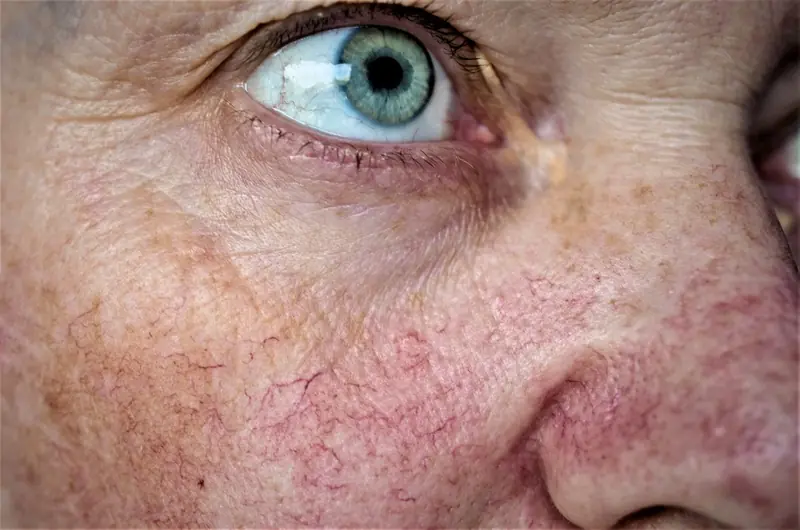
Thread veins on the face: the treatment options
| Treatment | How it works | Best for |
|---|---|---|
| ThermaVein | A hair-fine probe seals each vein with a small pulse of energy | Individual thread veins, spider naevi, delicate areas; a wide range of skin tones |
| IPL | Broad-spectrum light absorbed by haemoglobin heats and closes vessels | Diffuse redness with visible capillaries |
| Excel V laser | 532 nm and 1064 nm laser heats and collapses vessels | Stubborn or deeper vessels and redness |
Pulse offers all three and recommends what suits you after assessing your skin. ThermaVein does not target skin pigment, so it can be used on a wide range of skin tones; light-based treatments are less suitable for very dark skin.
Find out which facial vein treatment suits your skin. Consultations are usually by phone first.
Book a consultationSpider veins on the face: treatment step by step
- Consultation. Usually by phone first. The nurse asks about your veins, skin and medical history and suggests a treatment and session length.
- Preparation. For laser, Pulse advises avoiding sun and tanning for 4 weeks and retinoids or acids for 3 to 5 days, and arriving with clean, make-up-free skin.
- Treatment. ThermaVein takes 10 to 30 minutes. Laser and IPL feel like a quick warm snap.
- Aftercare. Expect some redness, and with ThermaVein possibly tiny crusts, for a few days. Avoid sun and use SPF 50.
- Review. Your nurse checks the result and advises if another session would help. Sessions are spaced at least 4 weeks apart.
What facial vein treatment costs
ThermaVein is priced by the time a treatment takes, including GST: $180 for a spot treatment of 10 minutes or less, $295 for a standard 15-minute session and $450 for an extended 30-minute session. Our ThermaVein page explains what each session suits and how appointments work.
| Area | Price range |
|---|---|
| Small area | $200 to $250 |
| Full face | $300 to $500 |
| Neck and chest | $200 to $300 |
| Leg veins | $300 to $500, depending on the extent of the veins |
IPL treatments range from $150 to $450 a session depending on area, with package pricing for courses. Your nurse will confirm the cost before treatment starts. Cosmetic treatments are not usually covered by health insurance.
Broken vessels on the face: results and keeping them away
Many facial veins look fainter straight away, though redness from treatment can hide this for a few days. Pulse says most people need 1 to 3 sessions, depending on vessel size and density. A successfully treated vein does not usually come back, but treatment does not stop new ones forming, so some people return for a top-up in later years. Individual results vary.
Sun protection before and after treatment is essential, Pulse notes, both for the result and to reduce recurrence.
Pulse lists these reasons you may not be suitable for light or laser treatment: pregnancy, a recent tan (sun or fake tan), photosensitising medicines, an active skin infection or dermatitis in the area, and very dark skin types, because of the risk of pigment changes. Your skin type is assessed before treatment.
ThermaVein may not suit you if you have a pacemaker or other implanted electrical device, are pregnant, or have an active skin infection, cold sore or broken skin in the area.
Frequently asked questions
What is the best treatment for broken capillaries on the face?
Pulse uses ThermaVein for individual veins and IPL or Excel V laser for redness across an area. Your nurse recommends one after assessing your skin.
How many sessions will I need?
Pulse says most people need 1 to 3 sessions, depending on vessel size and density.
How much does facial vein treatment cost?
ThermaVein is $180, $295 or $450 by session length, and Excel V ranges from $200 to $500 depending on area.
Is there downtime?
Usually minimal. Expect redness for a few hours to a few days, and with ThermaVein possibly tiny crusts.
Will broken capillaries come back?
A treated vein does not usually come back, but new ones can form over time. Sun protection helps.
Book a facial vein consultation with Pulse Aesthetics in Wellington.
Book a consultationAbout this page
Pulse Aesthetics treats facial thread veins with ThermaVein, the Excel V laser and IPL, as part of a specialist vein and skin clinic. This guide compares the three for broken capillaries on the face, using our own treatment and price information. Last reviewed 16 November 2026. If you spot anything out of date, email info@pulsehealth.nz and we will correct it.