

Who this is for: people with a sore on the lower leg or ankle that has not healed within 2 weeks, and family members or carers looking for specialist assessment. This page does not give wound care instructions; your nurse or doctor will.
On this page
The short answer
- A venous leg ulcer is an open sore caused by poor blood flow in the leg veins, usually around the inside of the ankle.
- Diagnosis usually includes an ultrasound scan of the veins and an ankle pressure test (ABI) before compression.
- Treatment commonly combines wound care, compression and treating the underlying vein problem.
- Signs of infection, such as spreading redness, warmth, discharge or fever, need prompt medical care.
What is a venous leg ulcer?
Our types of leg ulcers page explains that healthy leg veins use one-way valves to move blood back towards the heart. When those valves become weak or damaged, blood pools in the lower legs. The higher pressure leads to fluid and blood cells leaking into the surrounding skin, gradually damaging it until an ulcer forms.
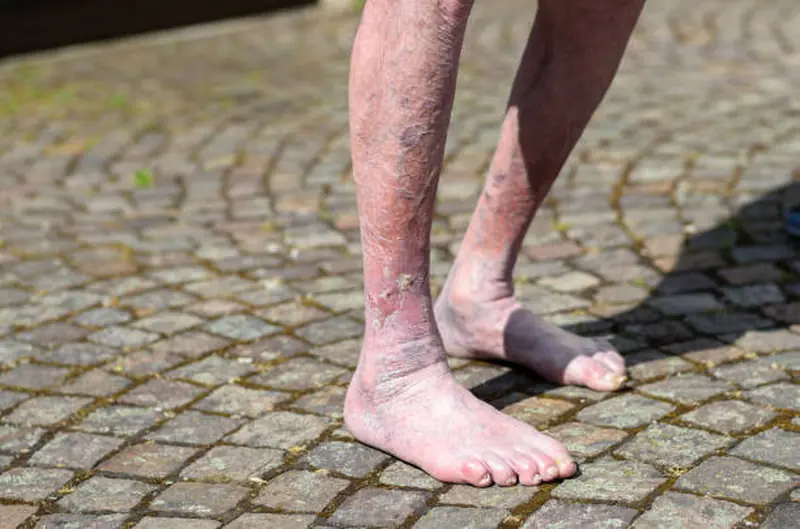
Venous ulcers most often develop around the inside of the ankle. Pulse describes the surrounding skin as often darkened or brown, thick or tight, and dry or itchy, with a leg that is often swollen towards the end of the day. The ulcer itself is usually shallow and irregular, and may leak clear or yellow fluid.
Varicose ulcer
A varicose ulcer is a form of venous ulcer caused by long-standing varicose veins and chronic venous disease. Pulse notes these are often accompanied by visible bulging veins, heaviness, aching, swelling and skin changes such as redness, dryness or dark staining before the ulcer appears. Venous ulcers can also follow a previous DVT (post-thrombotic syndrome).
When to get a leg ulcer checked
Pulse lists these symptoms of venous ulcers:
- a sore on the leg, foot or toes that has not healed within 2 weeks
- swollen ankles and heaviness in the legs
- discoloured or darkened skin around the wound
- itchy, dry, hardened or broken skin, sometimes with infection around it
Get prompt medical care from your GP or an urgent care clinic if there are signs of infection, such as spreading redness, warmth, increasing pain, discharge or fever. Call 111 in an emergency.
Not every leg ulcer is venous. Pulse lists arterial disease, diabetes, pressure, injury, skin cancers and inflammatory conditions as other causes, which is why the cause needs to be found before treatment.
A leg sore not healing after 2 weeks? Start Pulse's online ulcer consultation.
Book an assessmentHow a venous ulcer is diagnosed
- Examination of the ulcer and both legs.
- Ultrasound scan to see how well the veins and their valves work, and to check the arteries.
- Ankle-brachial index (ABI), a simple blood pressure test at the ankle or toes, which Pulse explains is often done to make sure compression is safe.
- Blood tests or swabs if infection is suspected, and sometimes a biopsy if a skin cancer or less common cause is possible.
Venous leg ulcer treatment: what it usually involves
Pulse explains that restoring healthy circulation is the key to healing. Treatment of a venous ulcer commonly includes:
| Compression | Bandages or medical stockings, which Pulse describes as essential for healing venous ulcers. They counteract the pressure in the veins and help blood and fluid flow back to the heart. |
|---|---|
| Wound care | Regular cleaning and dressings, by your nurse or clinic. |
| Elevation and walking | Raising the leg to reduce swelling, and gentle exercise such as walking. |
| Treating the veins | Closing leaking veins with endovenous ablation (VenaSeal or radiofrequency) or sclerotherapy, which Pulse says can reduce the chance of the ulcer returning. |
Healing time varies with the cause and your overall health. Pulse notes some ulcers heal within weeks to a few months, while long-standing or complex ulcers take longer and need specialist care. Ongoing care usually includes compression stockings and staying active.
Varicose ulcer treatment
For ulcers caused by varicose veins, Pulse maps the veins with a venous ultrasound scan and then treats the underlying varicose veins alongside wound care and compression. Read about sclerotherapy and Pulse's vein treatments.
How Pulse assesses leg ulcers
- Online consultation about your ulcer.
- Photos of both legs, standing, front and back, even if you think one leg is fine.
- Nurse consultation. A specialist nurse calls you and consults Pulse's vascular surgeon on the next steps.
- Investigations, often an ultrasound of the leg veins and arteries and an ankle or toe pressure test.
- Specialist review and treatment plan, in person, based on the cause.
Pulse provides compression fitting and advice. If you have health insurance, ask whether treatment of the underlying veins is covered; Pulse notes most insurers cover varicose vein treatment where there are complications such as ulcers. See treatment costs.
Frequently asked questions
What causes a venous leg ulcer?
Weak or damaged vein valves let blood pool in the lower leg, and the raised pressure gradually damages the skin.
How is a venous leg ulcer treated?
Pulse describes compression, wound care, elevation, walking and treating the underlying vein problem.
Why is an ankle pressure test done?
Pulse explains an ankle-brachial index test is often done to make sure compression is safe for you.
Can treating varicose veins help a leg ulcer?
Pulse says closing leaking veins with ablation or sclerotherapy can reduce the chance of the ulcer returning.
How long do venous ulcers take to heal?
It varies. Pulse notes some heal within weeks to a few months, while long-standing ulcers take longer.
Will a venous leg ulcer heal on its own?
Pulse explains that leg ulcers need diagnosis and appropriate treatment to heal, and that restoring healthy circulation is the key. Any sore on the leg that has not healed within 2 weeks should be checked.
Can a venous leg ulcer come back?
Yes, ulcers can return. Pulse notes that ongoing compression and treating the underlying leaking veins can reduce the chance of that happening.
When should a leg ulcer be seen urgently?
Get prompt care for spreading redness, warmth, increasing pain, discharge or fever.
Book a leg ulcer assessment with Pulse's specialist nurses and vascular surgeon.
Book an assessmentAbout this guide
Pulse provides specialist assessment and care for venous leg ulcers, including vein ultrasound and treatment of the underlying veins. This guide uses our leg ulcer pages and works alongside the wound care your nurse or GP provides. Last reviewed 16 November 2026. If you spot anything out of date, email info@pulsehealth.nz and we will correct it.