

Who this is for: people whose ankles swell by the end of the day, after standing or sitting for long periods, in hot weather, or with varicose veins. It is not for sudden or one-sided swelling, which needs a medical check first.
On this page
- Before you buy: swelling that needs a check first
- How compression socks help swollen ankles
- Compression socks for leg swelling: choosing strength and length
- Compression socks for oedema and longer-term swelling
- How to measure for compression socks
- Wearing compression socks every day
- Frequently asked questions
The short answer
- Graduated compression is strongest at the ankle, which helps limit fluid collecting there through the day.
- Light to moderate (class 1 to 2) below-knee compression suits most people with everyday ankle swelling, according to Pulse.
- Put socks on in the morning before swelling builds, and take them off at night.
- Sudden, painful or one-sided swelling, or swelling with breathlessness, needs urgent medical review, not socks.
Before you buy: swelling that needs a check first
Compression is a common way to manage everyday ankle swelling, but swelling has many causes and some need medical care. Our leg swelling pages list these warning signs:
- Swelling that comes on suddenly, or is in one leg only
- Swelling with pain, heat or redness in the leg
- Swelling that is still there in the morning after a night in bed
- Skin changes such as darkening, hardening or broken skin around the ankle
Get urgent help for sudden, painful swelling in one leg, which can be a sign of a blood clot. If swelling comes with chest pain or breathlessness, call 111.
If none of these apply and your ankles simply swell by evening, compression socks are a reasonable thing to try. Our FAQ also asks people with peripheral arterial disease, severe neuropathy, or unexplained leg pain or swelling to get medical advice before wearing compression. For causes, see our guide to what causes swollen ankles.
How compression socks help swollen ankles
Compression socks and stockings are made from elasticated nylon blends with a built-in pressure gradient. Pulse explains that the pressure is highest at the ankle and reduces up the leg, which:
- helps blood and tissue fluid move up and out of the lower leg
- limits fluid leaking from blood vessels into the surrounding tissue
- supports the calf muscle pump when you walk
- protects the skin from changes that long-term swelling can cause
They manage swelling while you wear them. They do not treat the underlying cause, which is why an assessment matters if swelling is new, getting worse or comes with other symptoms.
New Zealand's public health information agrees on the basics. Healthify NZ explains that graduated compression stockings are worn by people with poor blood flow who can walk around, advises putting them on first thing in the morning when legs are least swollen, and notes they are not suitable if you have suspected or proven peripheral arterial disease or an allergy to the stocking material.
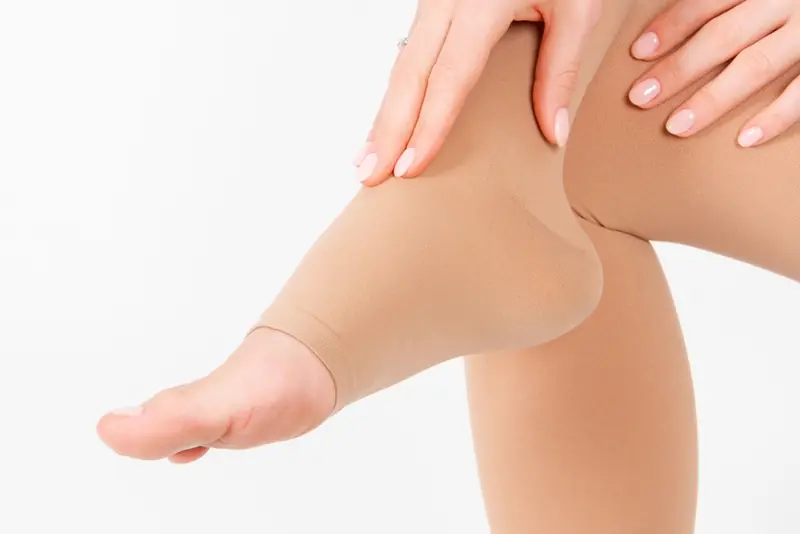
Compression socks for leg swelling: choosing strength and length
Pulse's nurses match compression to the cause of the swelling. As a guide:
| Type of swelling | Compression Pulse describes as suitable for most people |
|---|---|
| Everyday ankle swelling, aching legs, standing or sitting all day | Light to moderate, below knee |
| Oedema (fluid build-up, for example from vein disease, immobility or pregnancy) | Mild to moderate, classes 1 to 2, depending on severity |
| Lymphoedema | Moderate to firm, often flat-knit or custom-made |
| Lipoedema | Mild to moderate |
Below knee or thigh high?
Pulse recommends below-knee socks or stockings for most people, because ankle swelling is managed from the foot upwards and below-knee styles are easier to put on and wear every day. Thigh-high styles and tights are used for particular needs, such as after some surgery or with swelling higher up the leg.
Styles to compare in the Pulse shop
| Product | Class | Good to know |
|---|---|---|
| mediven elegance | Class 1 (class 2 on request) | Women's below-knee stocking for everyday wear |
| mediven plus | Class 1 | Open toe, easier with a slip sock and cooler in summer |
| mediven for men | Class 1 | Below knee with an everyday sock look |
| Venosan 6001 | Class 1 | Below knee, supplied with a veno-glider to help put it on |
Rubber gloves make firm stockings much easier to pull on. If your swelling needs class 2 or a flat-knit garment, a nurse fitting is the way to get it right.
Circular-knit or flat-knit?
Circular-knit stockings are thinner and easier to put on, and are generally used for mild to moderate compression. Flat-knit garments are thicker and firmer and less likely to dig in, and are used for lymphoedema, lipoedema and severe oedema.
Want to be sure of the right strength? Pulse nurses measure and fit compression.
Book a fittingCompression socks for oedema and longer-term swelling
Oedema simply means fluid in the tissues. Pulse lists venous disease, immobility, heart failure and pregnancy as common causes. If your swelling is linked to a heart, kidney or liver condition, your own doctor should guide whether compression is right for you and how firm it should be.
For swelling from vein problems, Pulse offers a nurse-led pathway with a Duplex ultrasound scan to look at how the veins are working, and a 5-step online consultation for leg swelling. You can read more on Pulse's leg swelling page.
How to measure for compression socks
- Measure in the morning, when swelling is lowest. If you measure later in the day, rest with your legs raised for 10 to 15 minutes first.
- Measure bare skin with a soft tape in centimetres, snug but not tight.
- Ankle: the narrowest point just above the ankle bone.
- Calf: the widest part of the calf, keeping the tape level.
- Length (below knee): from the floor to 2 to 3 cm below the crease behind the knee.
These are the steps Pulse's nurses use and publish in the size and measure guide. If your measurements sit between two sizes, or one leg is noticeably bigger than the other, ask for a fitting rather than guessing.
Wearing compression socks every day
- Put them on first thing in the morning, before swelling builds.
- Turn the sock inside out to the heel, place your foot in, then roll up gradually. Rubber gloves give much better grip.
- Wear them through the day and take them off at night, unless you have been told otherwise.
- Wash gently with mild detergent and air dry away from heat. Replace them about every 6 months.
Signs of a poor fit
- They should feel firm but comfortable, and should not cause pain, numbness or tingling.
- They should sit smoothly without wrinkles and stay up without rolling or digging in.
- Take them off and get advice if you notice toe discolouration or coldness, deep marks, pinching, rolling, or pain or swelling that gets worse.
Frequently asked questions
Do compression socks help swollen ankles?
Pulse describes graduated compression as a key way to manage leg swelling from oedema, because it helps fluid move out of the lower leg. It manages swelling while worn rather than treating the cause.
What strength should I start with?
Pulse says mild to moderate compression (classes 1 to 2) suits most people with oedema, depending on severity. A nurse fitting is the best way to choose.
Should I wear compression socks to bed?
Pulse's advice is to wear them during the day and take them off at night unless you have been told otherwise.
When should I not use compression socks for swelling?
Get medical advice first if you have peripheral arterial disease, severe neuropathy, or unexplained leg pain or swelling. Sudden or one-sided swelling needs urgent review.
Are compression socks for swollen ankles different from flight socks?
They work the same way. Travel socks are usually the lightest level, while ongoing swelling may need a firmer level or a different style.
Why are my ankles still swollen in the morning?
Pulse lists swelling that does not settle overnight as a reason to get your legs checked. Book an assessment with your GP or Pulse.
Talk to a Pulse nurse about your swelling and the right compression for it.
Book a fittingAbout this guide
Pulse runs nurse-led leg swelling care and fits medical-grade compression for oedema, lymphoedema and vein-related swelling. This guide draws on our leg swelling and compression advice and on Healthify NZ's page on compression stockings. Last reviewed 16 November 2026. If you spot anything out of date, email info@pulsehealth.nz and we will correct it.